Precision spectroscopy
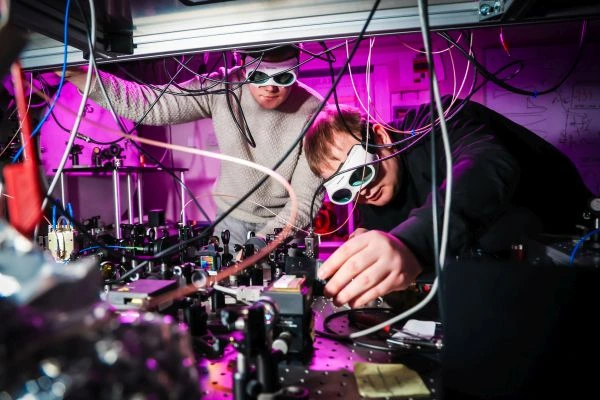
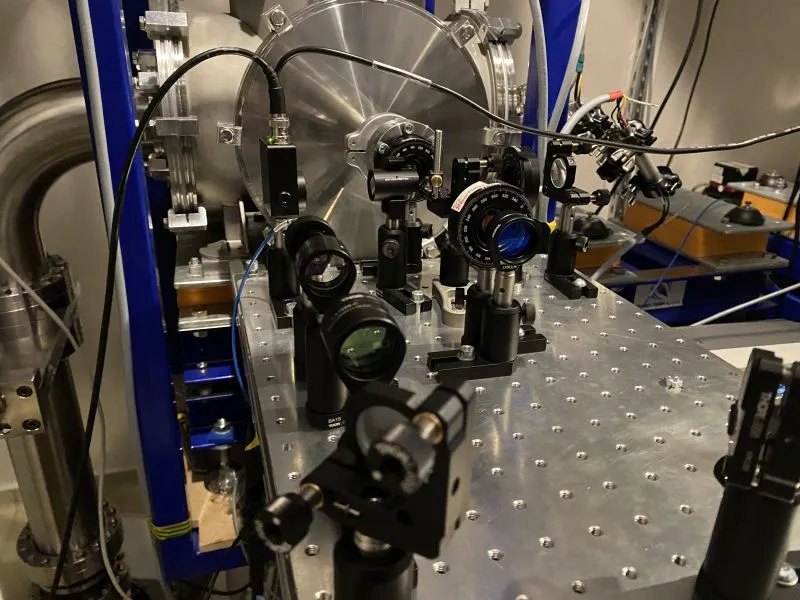
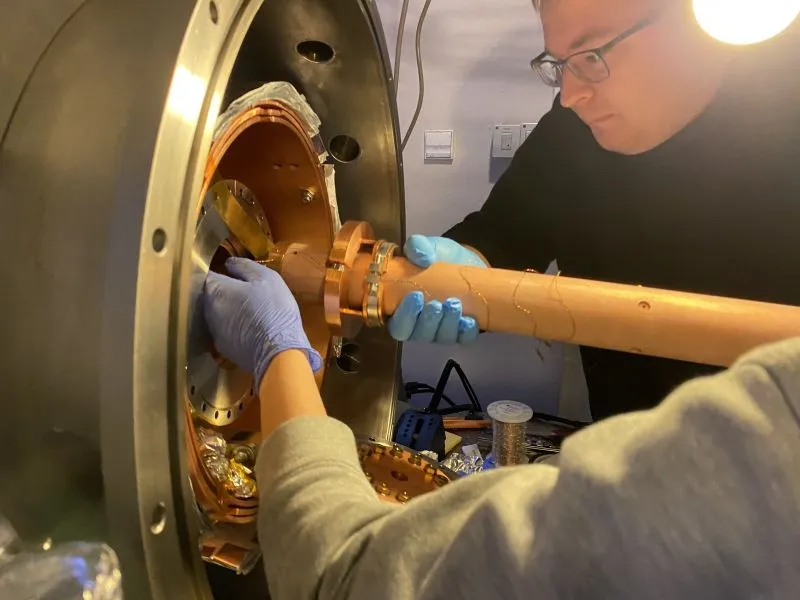
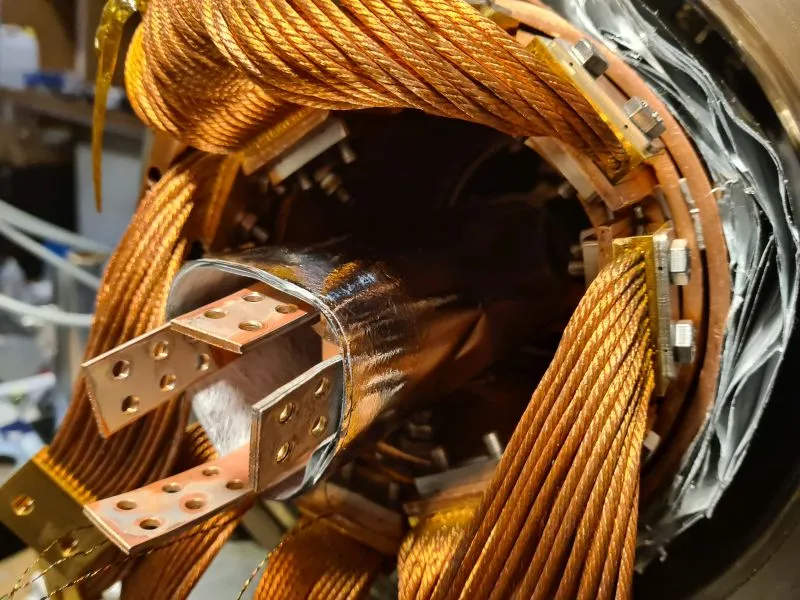
The main research direction of our group is the use of ultra-precise laser measurements to test quantum physics. We do this at different levels using different experimental approaches. One example is searching for variability in fundamental constants with optical atomic clocks. We developed a new experimental approach to search for short-time variations in the fine-structure constant [16] and used it to constrain some models of topological dark matter [16]. This led us to perform the first such measurement using a global network of optical atomic clocks [24]. Another example is testing the quantum-electrodynamics (QED) sector of the standard model for the case of molecular systems. We focus on molecular hydrogen [25], the simplest molecule in nature hence calculable from the first principles of quantum theory at high level of accuracy. We developed a cavity-enhanced spectrometer that is based on an optical resonator with exceptionally high finesse (F = 637000) [30]. The accuracy reached with this instrument corresponds to testing QED at the fifth significant digit. Recently, we moved this cavity-enhanced technology to a deep cryogenic regime [59, 72], which allowed us to improve the accuracy by over an order of magnitude [72]. In 2023, we launched a new project aimed at trapping cold molecular hydrogen. We develop an ultra-strong optical-dipole trap and a novel cryogenic molecular source which combined will allow us to confine H2 molecules with the ultimate goal of improving the accuracy of H2 energy structure measurements by orders of magnitude. Further example of our experimental activity are accurate studies of atomic and molecular interactions and collisional phenomena. We do it by performing precision spectroscopy of the collision-induced shapes of molecular lines. This allows us not only to experimentally validate quantum-chemical calculations of intermolecular potential energy surfaces [31, 37, 52], but also to test quantum-scattering calculations [52, 69] and line-shape models which describe collisional relaxation of an optical coherence and its redistribution among different velocity classes [5, 38, 60].